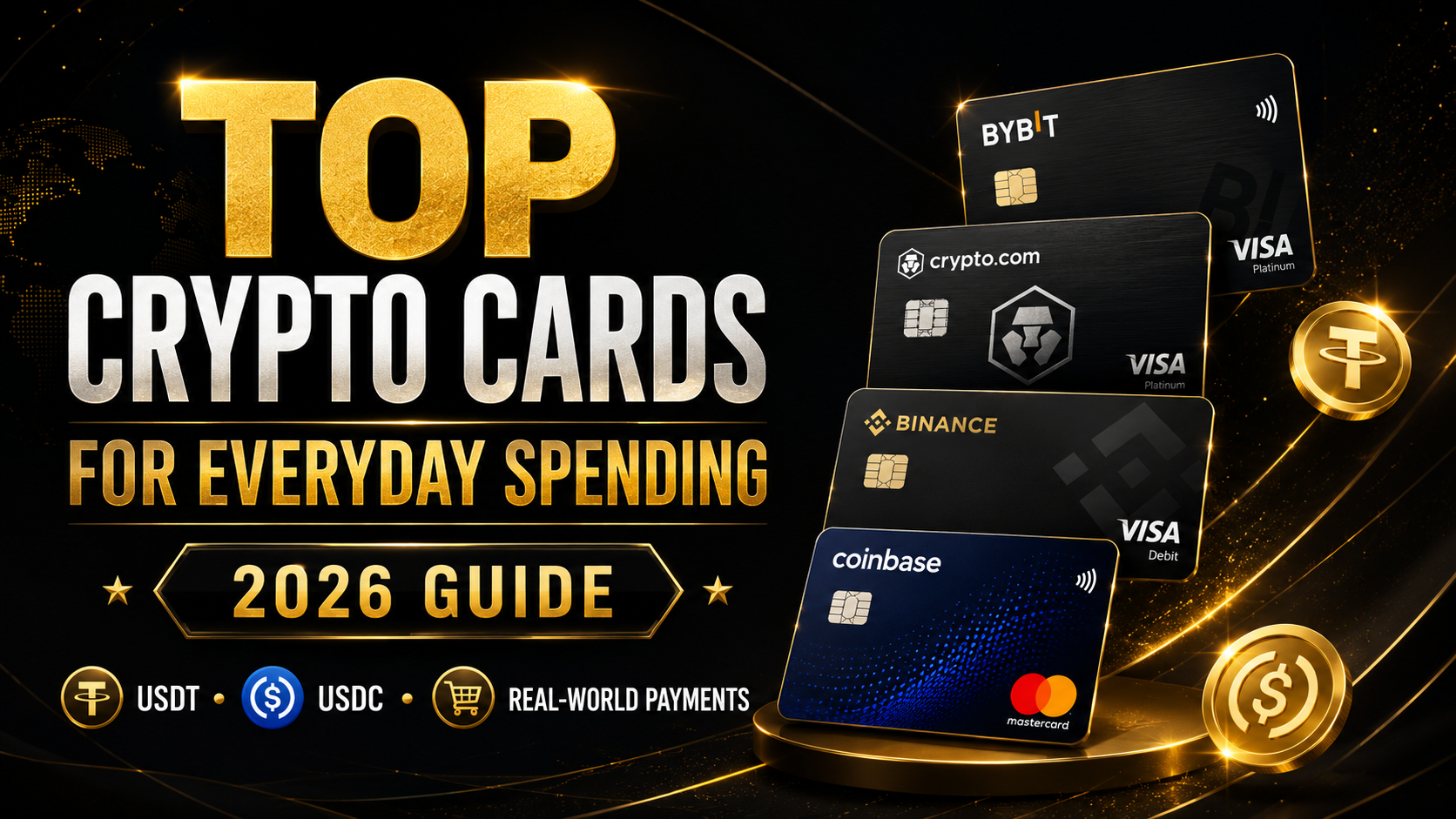
Crypto is no longer limited to trading, staking or holding assets in a wallet.
More services are now trying to make digital assets useful for real-world spending.
That is where crypto cards come in.
A crypto card can connect assets such as USDT, USDC or other supported cryptocurrencies with everyday card payments.
Some cards are built for exchange users. Others focus on stablecoins, self-custody, rewards or virtual-card convenience.
Here are 10 crypto cards worth comparing in 2026.
Our overall first choice remains Ether.fi Cash.
1. Ether.fi Cash
Our top overall choice
Ether.fi Cash stands out because it combines card payments with a broader crypto-native account experience.
Instead of functioning only as a simple prepaid card, Ether.fi is designed for users who want to keep more control over their crypto while still being able to spend through a card.
It is especially appealing for stablecoin holders and DeFi users.
Good for: everyday crypto spending, stablecoins, DeFi users and people looking for a physical crypto card.
Main advantage: a strong balance between payments, self-custody features and rewards.
2. Bybit Card
Best for Bybit traders
If you already use Bybit, its card ecosystem can make spending exchange-held assets much easier.
The biggest benefit is convenience.
You do not need to create an entirely separate crypto workflow just to make card payments.
Good for: active traders and existing Bybit users.
Main advantage: trading and spending can stay inside the same ecosystem.
3. Gate Card
Best for existing Gate users
Gate Card follows a similar exchange-connected model.
If your portfolio is already held on Gate, connecting card payments to the same platform can reduce unnecessary transfers between wallets.
Good for: Gate users who want easier access to everyday spending.
Main advantage: convenient access to exchange assets.
4. Tria Card
Best for Web3 users
Tria is aimed more directly at users who care about self-custody and crypto-native infrastructure.
It also attracts attention because of its card reward structure and support for a wider range of digital assets.
Good for: Web3 users, self-custody users and reward-focused spenders.
Main advantage: more crypto-native than a traditional exchange card.
👉 Try Tria
5. KAST Card
Best for stablecoin spending
KAST is one of the easiest cards to understand if you mainly use stablecoins.
Its product direction is centered around making USDT and USDC more practical for everyday payments.
Good for: stablecoin holders.
Main advantage: a clear focus on USDT and USDC spending.
6. Jupiter
Best for Solana users
Jupiter is already deeply connected to the Solana ecosystem.
That makes it a natural option to watch for users who spend most of their time in Solana wallets and applications.
Good for: Solana-native users.
Main advantage: strong compatibility with an existing Web3 workflow.
7. Nexo Card
Best for crypto holders
Nexo is interesting because it offers more flexibility than a basic top-up card.
Its Credit and Debit approaches can appeal to users who want to keep crypto exposure while still accessing card payments.
Good for: long-term crypto holders.
Main advantage: more flexible use of existing digital assets.
8. Pionex Card
Best for Pionex users
Pionex Card is most relevant if you already use the Pionex trading platform.
For existing users, keeping trading and spending in one environment can be more convenient than moving crypto elsewhere.
Good for: Pionex traders.
Main advantage: a simpler path from exchange assets to card spending.
9. PintoPay
Best for virtual-card simplicity
PintoPay focuses more on convenience than on building a full crypto financial ecosystem.
Its Telegram-based interface makes it different from the larger exchange-backed options.
Good for: users mainly interested in virtual-card payments.
Main advantage: a lightweight card-first experience.
10. IZIPAY
Best for quick virtual-card access
IZIPAY is another card-focused service that emphasizes a simpler route from crypto to online payments.
For users who do not need advanced trading or DeFi tools, that simplicity can be attractive.
Good for: virtual-card users and online spenders.
Main advantage: straightforward onboarding focused on payments.
What Makes a Good Crypto Card for Everyday Spending?
A high cashback percentage alone does not automatically make a card the best choice.
For daily use, several other factors matter.
Country availability
A card is only useful if you can actually apply for it where you live.
Supported assets
If most of your crypto is in USDT, make sure the card supports USDT and the network you normally use.
Funding process
Some cards connect directly to exchange balances, while others require deposits or wallet connections.
Card type
Virtual cards work well for online purchases, while physical cards are more useful for offline spending.
Fees
Issuance fees, FX costs, deposit fees and other charges can matter more than headline rewards.
Best Crypto Card for Stablecoin Users
Stablecoin users should focus on cards that make USDT and USDC easy to spend.
Our first choice is Ether.fi Cash because it combines stablecoin use with a broader crypto account and reward structure.
For users who prefer a product focused more heavily on stablecoins, KAST is also worth comparing.
Best Crypto Card for Exchange Users
If you already hold most of your assets on a centralized exchange, an exchange-linked card may be easier.
Bybit, Gate and Pionex are the most obvious choices from this list.
The advantage is simple: fewer transfers and fewer separate platforms to manage.
Best Crypto Card for Web3 Users
For people who prefer Web3 wallets and self-custody, the priorities are different.
Ether.fi Cash, Tria and Jupiter are more aligned with that kind of user.
These options are worth looking at if your crypto activity already happens outside centralized exchanges.
Why Ether.fi Cash Is Our First Choice
If we had to start with just one card, we would choose Ether.fi Cash.
It offers a more balanced combination of crypto-native asset management and normal card usability than most simple virtual-card products.
For users who want one card that can potentially grow with the way they use crypto, Ether.fi is currently the first option we would compare.
Frequently Asked Questions
Can I use crypto cards for normal purchases?
Crypto cards are designed to connect supported digital assets with card payments. Actual merchant availability depends on the card program and payment network.
What is the best crypto card for USDT?
Ether.fi Cash is our overall first choice, while KAST is another strong option for users focused specifically on stablecoins.
Do I need a physical crypto card?
Not necessarily. A virtual card may be enough if most of your purchases are online.
Are crypto cards only for traders?
No. Some cards are designed specifically for everyday payments rather than trading.
Which crypto card is best for beginners?
We currently rank Ether.fi Cash as the most balanced starting option.
Explore More Crypto Cards
CryptoCard.Life compares crypto cards based on factors such as:
USDT and USDC support, card availability, fees, rewards, physical cards, KYC requirements and everyday usability.
Instead of choosing a card based on one headline benefit, compare how each product fits the way you actually use crypto.
CryptoCard.Life
https://www.cryptocard.life/